San Bernardino properties face distinct termite threats driven by regional microclimates and varied soil profiles. In northern foothill neighborhoods such as Verdemont and Arrowhead Springs, intense dry summer heat…
San Bernardino properties face distinct termite threats driven by regional microclimates and varied soil profiles. In northern foothill neighborhoods such as Verdemont and Arrowhead Springs, intense dry summer heat triggers drywood termite swarms that enter through attic louver vents, exposed rafter tails, and fascia boards. Conversely, loose alluvial soils surrounding Kendall and Del Rosa allow subterranean termites to construct concealed mud tubes up foundation stems, accessing structural sill plates and interior drywall framing undetected.
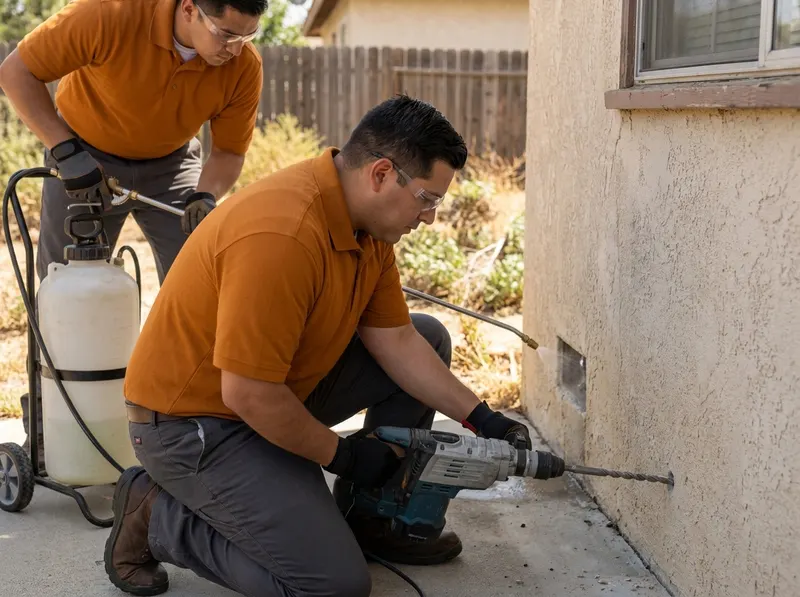
Decision-fit remediation prioritizes localized precision over disruptive blanket measures. When drywood termite activity is confined to specific structural timbers in Amber Hills or North Park properties, targeted direct-wood injections eradicate galleries without requiring tenting or household relocation. For subterranean termite intrusions, technicians establish continuous non-repellent liquid soil barriers and monitoring stations around the foundation perimeter, intercepting foraging workers before they reach structural wood.
Treatments are formulated for clinical safety and perimeter defense. Termiticide applications are concentrated within wall cavities, subflooring, and subterranean trenches rather than open living spaces, ensuring pets and occupants remain completely undisturbed during remediation. Every treatment plan is grounded in observable diagnostic findings, providing clear corrective action without forced long-term maintenance contracts.
Every job gets a firm, written price after a free on-site visit.
Tell us about your subterranean & drywood termite remediation job in San Bernardino and we'll send a clear, written quote — usually the same day.
 Abrixon Pest Control Services